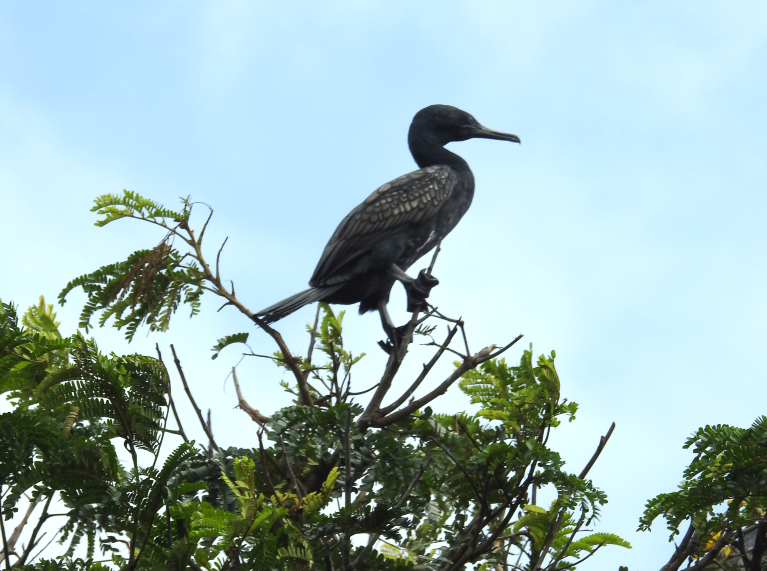
In June, people in Kolkata’s Belgachia area watch the spectacular mass arrival of Indian cormorants (Phalacocorax fuscicollis) at the campus of the West Bengal University of Animal and Fishery Sciences (WBUAFS).
The display is impressive, but the fish-eating birds carry an antimicrobial resistant bacterium, a WBUAFS research team has found by analysing their faeces1.
“The bacterium harbours antimicrobial resistance genes,” says veterinary microbiologist, Siddhartha Narayan Joardar, who led the study.
The birds share the ecosystem, including nearby water bodies, with humans and could pass the resistance genes, posing a great threat to public health, Joardar warns.
“Studies like this are crucial and should be expanded to other areas of Kolkata and other metro cities because growing evidence shows the presence of antimicrobial-resistant bacteria in common urban birds such as sparrows, pigeons, and crows,” says Abhrajyoti Ghosh, an environmental biochemist at the Bose Institute in Kolkata.
Joardar and his colleagues previously detected drug-resistant bacteria in domestic ducks and captive wild birds, but not in wild birds.
The cormorants whiten the trees and the ground beneath with their droppings that fill the air with a peculiar strong smell. “This smell intrigued me,” says Joardar.
The team, which included Bandana Tirkey and Medhatithi Chakraborty, collected the droppings for analysis, and identified the presence of Escherichia coli. The E. coli-positive samples were then exposed to commonly used antibiotics such as doxycycline, tetracycline, chloramphenicol, gentamicin, cefixime and combination of antibiotics such as piperacillin and tazobactam, and ticarcillin and clavulanic acid.
They found that the bacterial isolates were resistant to two different combination of antibiotics. One is piperacillin and tazobactam, and the other ticarcillin and clavulanic acid. The bacteria was also resistant to cefixime, a third-generation semi-synthetic antibiotic.
Next, amplifying the bacterial genes, they detected two antibiotic resistance genes that encode two enzymes — extended spectrum beta-lactamase and AmpC beta-lactamase. These enzymes help the drug-resistant bacteria to break down antibiotics, making infections harder to treat.
The antibiotic-resistant bacteria entered the cormorants when they ate fish from nearby ponds which are frequently used by humans and regularly receive human wastewater. “The birds can release the drug-resistant bugs into the environment through their droppings which when dried, can contaminate the air,” says Joardar.
Apart from humans, the antibiotic-resistant bacteria can migrate from wild birds to other mammals in an urban area2. According to Joardar, open-billed storks which share the same habitat with the cormorants can pick up the antibiotic-resistant bug and spread it to other animals.
“We must protect and restore natural habitats, improve waste and water management, regulate antibiotic use, and promote sustainable urban planning to avert the risks of spill-over to humans,” says ornithologist Ashish Jha at the Wildlife Institute of India in Dehradun, who is not involved in the WBUAFS study.
“We don’t know how to monitor and stop any future transmission from the cormorants to humans without harming the birds,” Joardar says. The birds leave the campus by the end of winter and will not return till late June. “During this gap, the antibiotic-resistant bug in their guts will continue to evolve, pick up new genes and who knows may even morph into a deadlier superbug,” he warns.