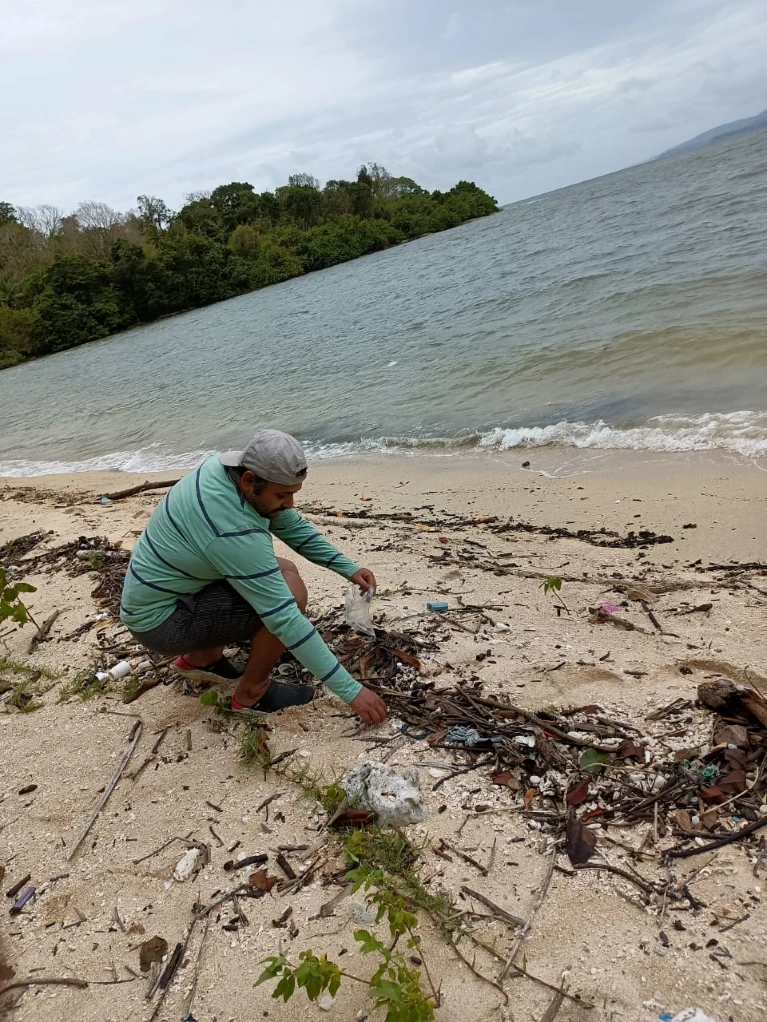
The molten plastic mass was found on the beaches of Andaman and Nicobar
A research team has found a piece of ‘plastiglomerate’ during a marine litter survey in the Andaman and Nicobar Islands1. The piece ― a molten mixture of sediments and other natural debris held together by plastic ― indicates widespread plastic pollution in these pristine and deserted beaches, the researchers say.
Beach campfires or trash-fires generate plastiglomerates, as molten plastic, sand grains, coral fragments, shells and wood debris lump together. Since their first documentation in 2014 on Kamilo Beach, Hawaii, plastiglomerates have been found on the beaches of the United States of America, Indonesia, Portugal, Canada and Peru.
This plastigomerate recovered from Aves Island, is the first reported from and Indian subcontinent beach, said environmental chemist and team leader Punyasloke Bhadury at the Indian Institute of Science Education and Research Kolkata in West Bengal.
Bhadury and his colleague Prasun Goswami studied the plastiglomerate’s structural and chemical composition using sophisticated imaging techniques. They found that it had gas bubble apertures and vesicles filled with other substances. The plastiglomerate contained a green plastic material polyethylene, frequently used in the packaging industry, and a black plastic piece that resembled polyvinyl chloride, used in electrical insulation.
The flame-resistant polyvinyl chloride piece retained its shape on the plastiglomerate while the polyethylene melted. “On the less-frequented beach of Aves Island, weathering and waves can release microplastics from such plastiglomerates which may be washed into the sea and end up in humans via marine animals, primarily edible fish,” Bhadury said.